Project type
UX research
Focus
Civic usability and navigation
Role
Lead UX Researcher
Client
Adelaide Council
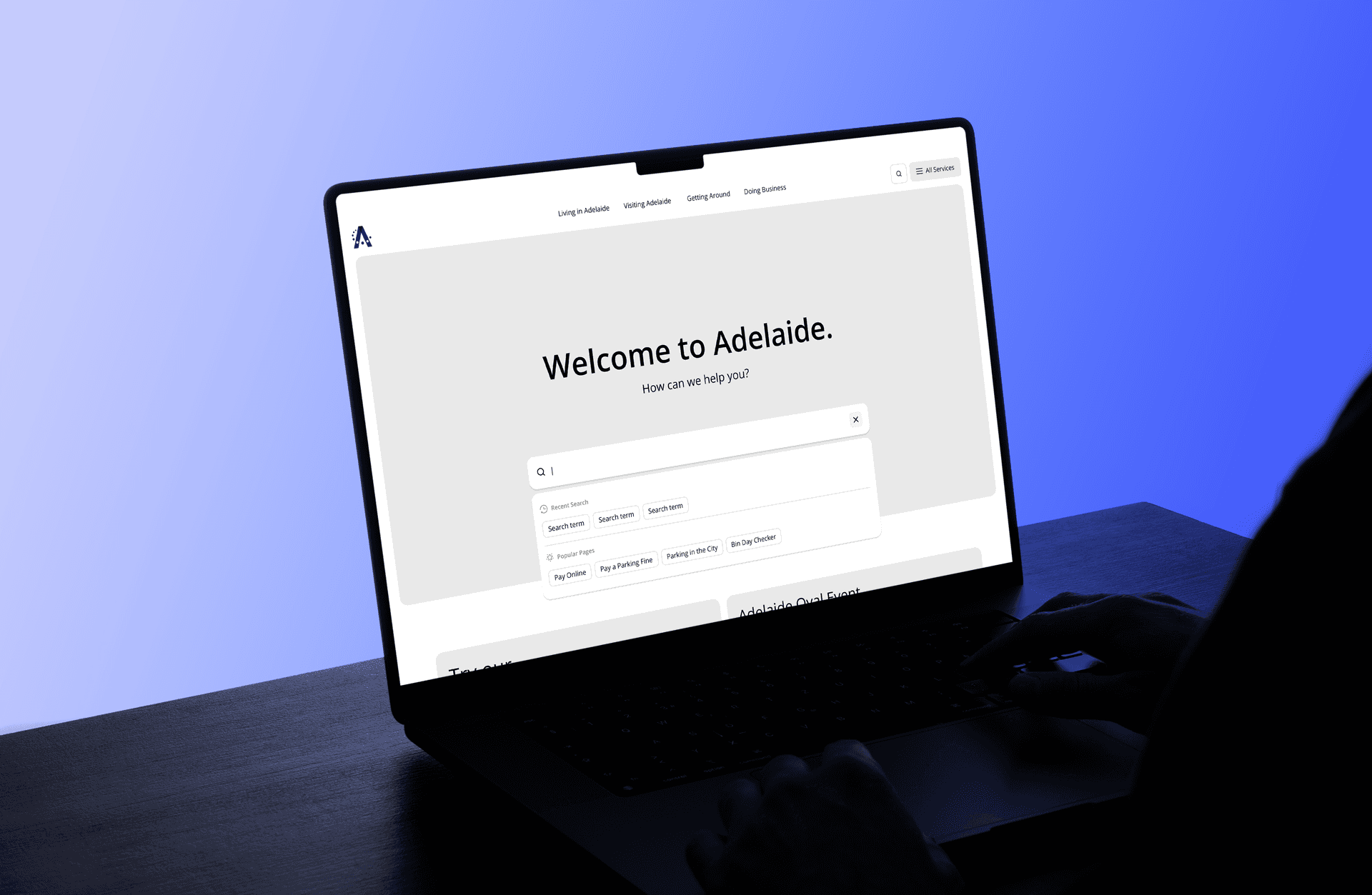
The City of Adelaide website was underperforming at the top of the funnel, with a 94% homepage bounce rate and users routinely defaulting to search as a workaround instead of navigating confidently.
My role was to identify where journeys were breaking down across key audiences, then deliver a clear, evidence-backed plan the internal team could implement as part of a broader redesign program.
Design approach
What the research revealed
The research revealed consistent breakdowns across the site. Users struggled to locate services, terminology didn't match their language, high-value tasks were abandoned, and mobile interactions created additional friction.
The recurring theme was low confidence. Participants questioned whether they were in the right place, especially when journeys crossed sub-sites or redirected externally.
What the research revealed
The research revealed consistent breakdowns across the site. Users struggled to locate services, terminology didn't match their language, high-value tasks were abandoned, and mobile interactions created additional friction.
The recurring theme was low confidence. Participants questioned whether they were in the right place, especially when journeys crossed sub-sites or redirected externally.
Audience definition
Through stakeholder workshops, we aligned on three primary audiences and their goals:
Residents: fast access to council services and self-service tasks.
Businesses: permits, support, grants, supplier opportunities. Often fragmented across organisations and touchpoints.
Visitors: practical city info, events, and “getting around” support, without broken flows or disconnected sub-sites.
We used a Value Proposition Canvas approach to anchor decisions in user jobs, pains, and gains. Aligning internal stakeholders around what the site should enable.
Audience definition
Through stakeholder workshops, we aligned on three primary audiences and their goals:
Residents: fast access to council services and self-service tasks.
Businesses: permits, support, grants, supplier opportunities. Often fragmented across organisations and touchpoints.
Visitors: practical city info, events, and “getting around” support, without broken flows or disconnected sub-sites.
We used a Value Proposition Canvas approach to anchor decisions in user jobs, pains, and gains. Aligning internal stakeholders around what the site should enable.
Methods
I combined qualitative and quantitative methods:
Survey with 200 participants for validation.
Moderated usability testing with 30 participants.
Analytics review to identify drop-offs.
All findings were synthesised in a Condens repository to make insights traceable and reusable as a benchmark for future testing.
Methods
I combined qualitative and quantitative methods:
Survey with 200 participants for validation.
Moderated usability testing with 30 participants.
Analytics review to identify drop-offs.
All findings were synthesised in a Condens repository to make insights traceable and reusable as a benchmark for future testing.
Key insights
Across all audiences, the same failure pattern repeated:
Users couldn’t reliably complete common tasks without friction.
Navigation and labels didn’t match mental models, pushing people to search instead.
The homepage didn’t orient first-time users or provide clear pathways.
Mobile behaviour introduced additional friction and reduced confidence.
Key insights
Across all audiences, the same failure pattern repeated:
Users couldn’t reliably complete common tasks without friction.
Navigation and labels didn’t match mental models, pushing people to search instead.
The homepage didn’t orient first-time users or provide clear pathways.
Mobile behaviour introduced additional friction and reduced confidence.
Deliverables
UX reporting
I synthesised audience-specific findings into a single prioritised set of recommendations, giving stakeholders a shared view of where effort would have the greatest impact.
UX reporting
I synthesised audience-specific findings into a single prioritised set of recommendations, giving stakeholders a shared view of where effort would have the greatest impact.
Research repository
A fully tagged Condens workspace was established to preserve insights, behavioural evidence, and benchmarks. This became the foundation for ongoing usability measurement and future validation.
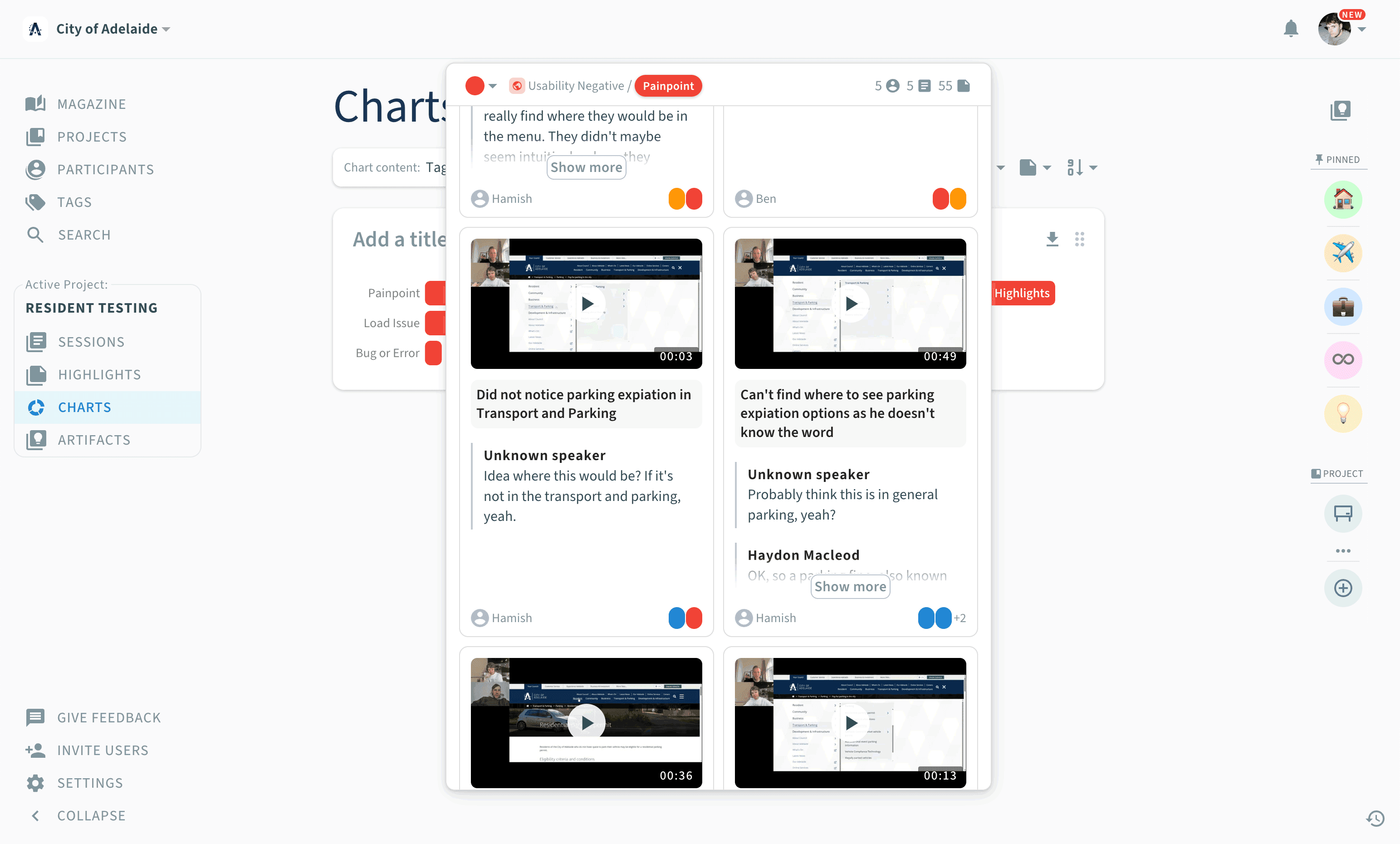
This view shows desktop testing for the resident audience, combining video highlights and verbatim quotes to identify recurring pain points and validate patterns across sessions.
Research repository
A fully tagged Condens workspace was established to preserve insights, behavioural evidence, and benchmarks. This became the foundation for ongoing usability measurement and future validation.
This view shows desktop testing for the resident audience, combining video highlights and verbatim quotes to identify recurring pain points and validate patterns across sessions.
Recommendations and annotated wireframes
A practical roadmap focused on high-leverage fixes, including:
Restructure information architecture.
Redesign navigation around user goals and plain-language labels.
Redesign high-friction pages for scannability and task completion.
Improve mobile usability.
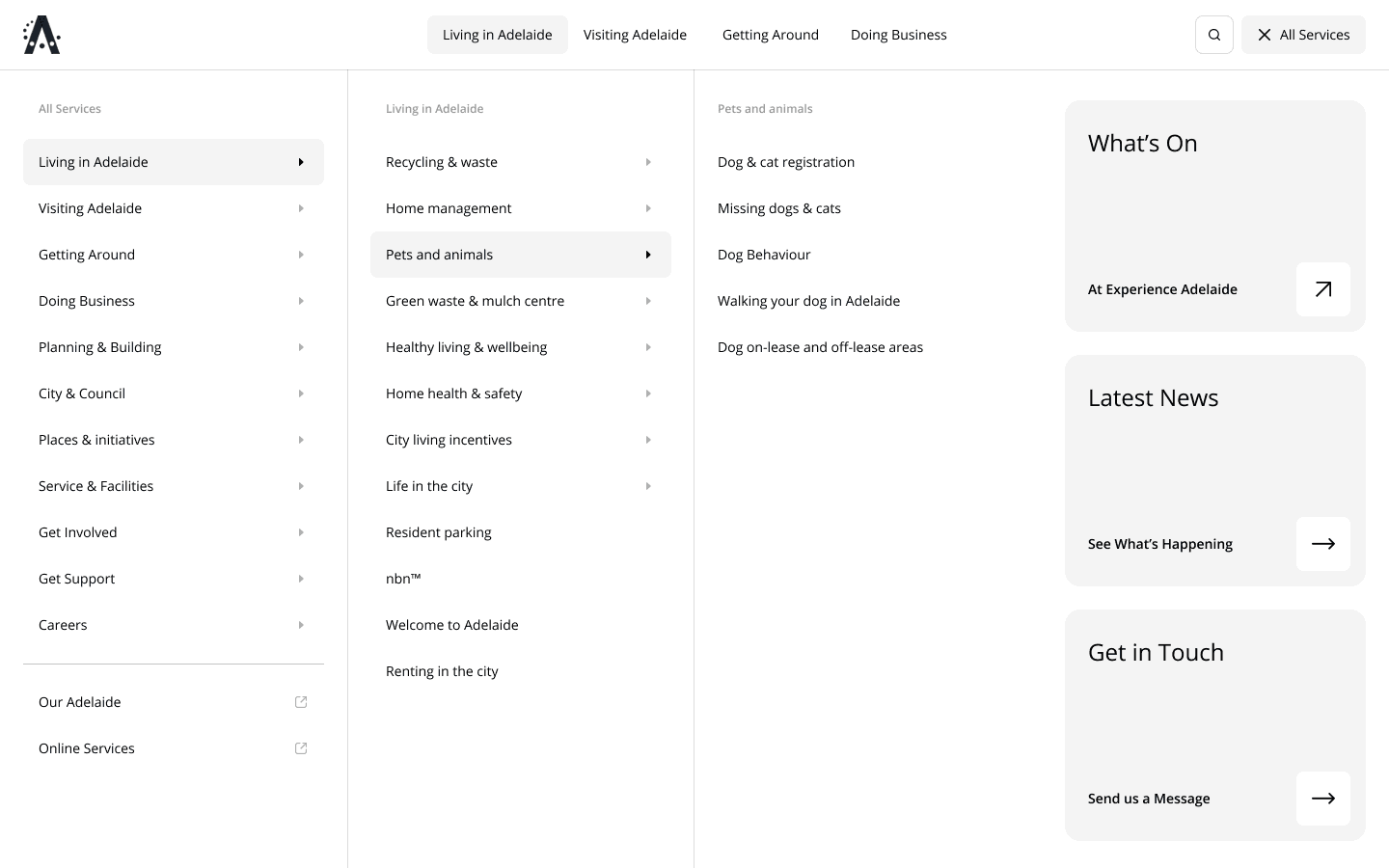
Goal-oriented navigation organised around user intent rather than council structure. Clear, plain-language labels help users confidently identify the right pathway, while progressive disclosure supports movement into deeper content layers without overwhelming first-time visitors.
Recommendations and annotated wireframes
A practical roadmap focused on high-leverage fixes, including:
Restructure information architecture.
Redesign navigation around user goals and plain-language labels.
Redesign high-friction pages for scannability and task completion.
Improve mobile usability.
Goal-oriented navigation organised around user intent rather than council structure. Clear, plain-language labels help users confidently identify the right pathway, while progressive disclosure supports movement into deeper content layers without overwhelming first-time visitors.
Research-informed content and SEO guidance
Research insights informed a content writing guide and SEO audit delivered by specialists within the wider team. Findings aligned terminology, page structure, and search strategy with real user intent, ensuring the redesigned architecture could be supported by clear, discoverable content.
Research-informed content and SEO guidance
Research insights informed a content writing guide and SEO audit delivered by specialists within the wider team. Findings aligned terminology, page structure, and search strategy with real user intent, ensuring the redesigned architecture could be supported by clear, discoverable content.
This work provided a clear, evidence-backed foundation for redesign. The City’s internal team began implementation using a prioritised roadmap, reusable research evidence, and a shared benchmark for ongoing usability testing.
The findings continue to inform design, content, and optimisation decisions across the site, ensuring future changes are grounded in validated user needs rather than assumption.